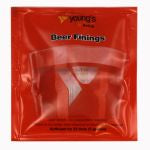
Young's Beer Finings is a single-part fining product that clears stubborn hazes from home brew beer quickly and effectively. Fining is the technique of adding a substance to beer that attracts yeast cells and causes them to clump together and sink, leaving the beer clear and bright above.
Treats up to 23 litres. Add to your fermentation vessel 24–48 hours before bottling, stir gently, and leave undisturbed in a cool location.
Ingredients: Water, acid (malic acid), chitosan (crustaceans), preservative (sodium metabisulphite). Contains chitosan, so this product is not suitable for vegans or vegetarians — if you need a vegan-friendly beer fining, see our Starbrite Finings or Mangrove Jack's Liquid Beer Finings, both confirmed vegan.
Young's Beer Finings
How to Use
Dose
1 sachet
per 23 litres
Used for: Single-part liquid finings - clears beer and packs the yeast sediment down.
When: After fermentation has finished, about 2 days before bottling or kegging.
Step by step
1Check fermentation has finished.
2Pour the sachet into the beer and stir gently.
3Leave for 2 days.
4Bottle or barrel.
Good to know: ALLERGENS: crustacean (chitosan) and sulphites. Not suitable for vegetarians or vegans - try Starbrite or Mangrove Jack's Liquid Finings instead.
Frequently Asked Questions
When should I add beer finings?
Add finings after primary fermentation is complete (confirmed by
hydrometer), 24–48 hours before you plan to bottle. Stir in gently, then leave the vessel undisturbed in a cool place (12–18°C if possible). The yeast and proteins clump together and sink to the bottom, leaving clear beer above.
Do I have to use beer finings?
No — finings are optional. Many home brewers bottle without them and the beer clears naturally in the bottle over time. However, finings speed up the process significantly and produce a noticeably clearer result in the glass. For competitions or if you care about clarity, they're worth using.
Will beer finings affect the flavour?
No — correctly used finings have no detectable effect on flavour or aroma. They simply cause yeast and proteins to settle faster. The beer tastes identical whether or not finings were used.
My beer is still hazy after using finings — why?
If haze persists after finings, it may be chill haze (proteins that only form when the beer is cold), yeast haze (from a very active yeast strain), or permanent haze from insufficient proteins dropping out. Try cold crashing (cooling to 2–4°C for 48 hours) before bottling for best clarity.
Can I use beer finings in wine or cider?
Young's Beer Finings is formulated specifically for beer. For wine, use
Bentonite or Kieselsol/Chitosan fining agents. For cider, beer finings can work but dedicated cider finings give better results.
Is Young's Beer Finings vegan?
No. It contains chitosan derived from crustacean shells, so it's not suitable for vegans or vegetarians. For a confirmed vegan-friendly beer fining, see Starbrite or Mangrove Jack's Liquid Beer Finings.
Do you stock isinglass?
Not currently. Isinglass is a fish-derived fining traditionally used for cask-conditioned real ale — it's added to the cask itself to clear the beer as it conditions, rather than in the fermenter before bottling. If you're bottling or kegging rather than cask-conditioning,
Young's Beer Finings (this product) achieves the same end result — a bright, clear beer — for standard home brew setups. If you specifically brew for cask and want a traditional isinglass finish, it's worth checking with a specialist cask-ale supplier.