


Young's
More from Young'sYoung's Citric Acid 100g for Wine Making
Young's Citric Acid 100g for Wine Making
Regular price
£2.99
Regular price
Sale price
£2.99
Taxes included.
Shipping calculated at checkout.
Quantity
Couldn't load pickup availability
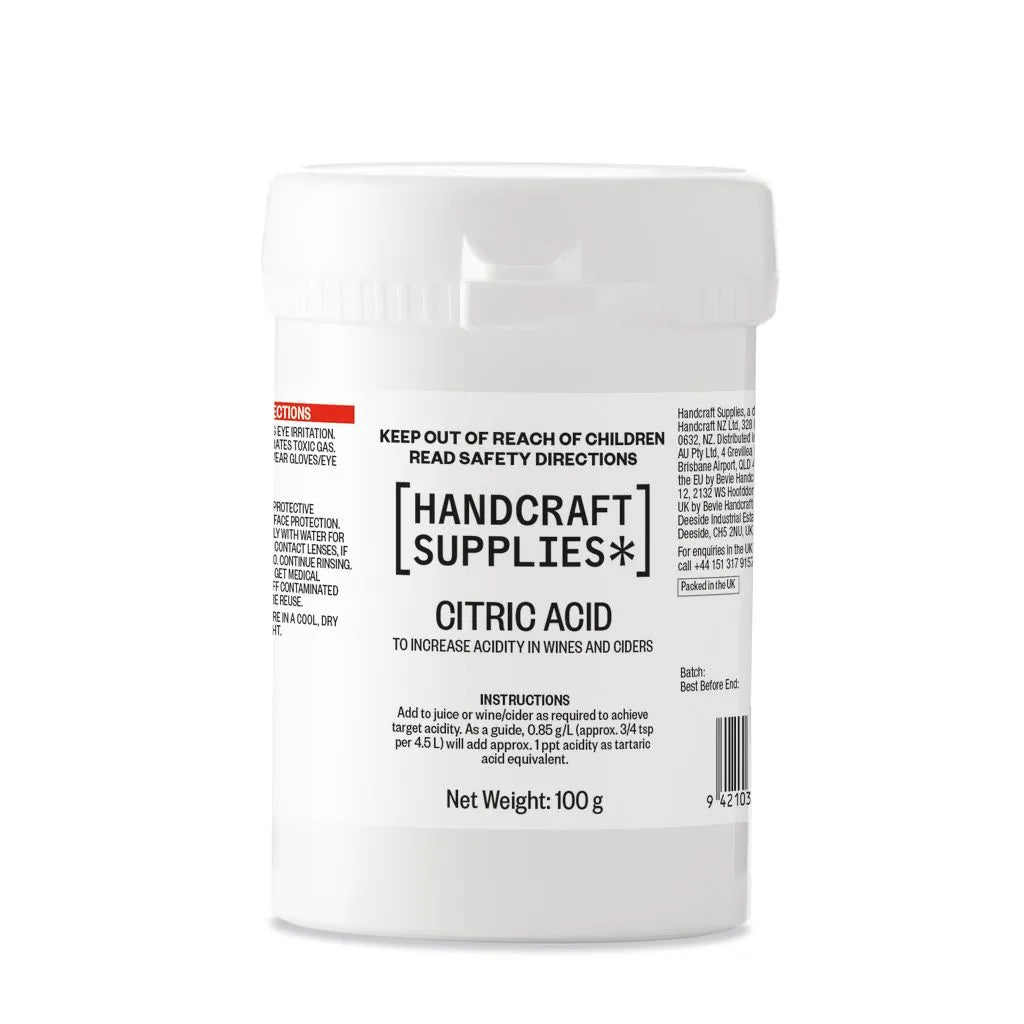

Citric Acid 100g is a natural organic acid that replaces fresh lemon juice in fruit and country wine recipes. It acidifies the must, helps fermentation get off to a healthy start and adds a clean tartness.
Key features
- Raises acidity in wine and cider musts
- Promotes a healthy fermentation environment
- Mild antiseptic properties help protect the ferment
- Particularly useful with low-acid fruits such as elderberry, blackberry and stone fruit
Specs
- Contents: citric acid, 100g
- Typical rate: about 1 teaspoon per 4.5 litres in fruit wine
How to use
Stir into the must at the start with the sugar and nutrient - see the How to Use box.
Complete your fruit wine setup
- Yeast Nutrient - keeps the yeast healthy
- Young's Super Wine Yeast Compound - all-purpose wine yeast
- Muslin Bags - for straining fruit
- 25 Litre Fermentation Vessel and Bubbler Airlock
Ideal for hobby winemakers making small batches. Making lots? The 1kg bag is better value.