

Handcraft Supplies
Bubbler Airlock with Red Cap
Bubbler Airlock with Red Cap
Regular price
£1.49
Regular price
Sale price
£1.49
Taxes included.
Shipping calculated at checkout.
Quantity
Couldn't load pickup availability
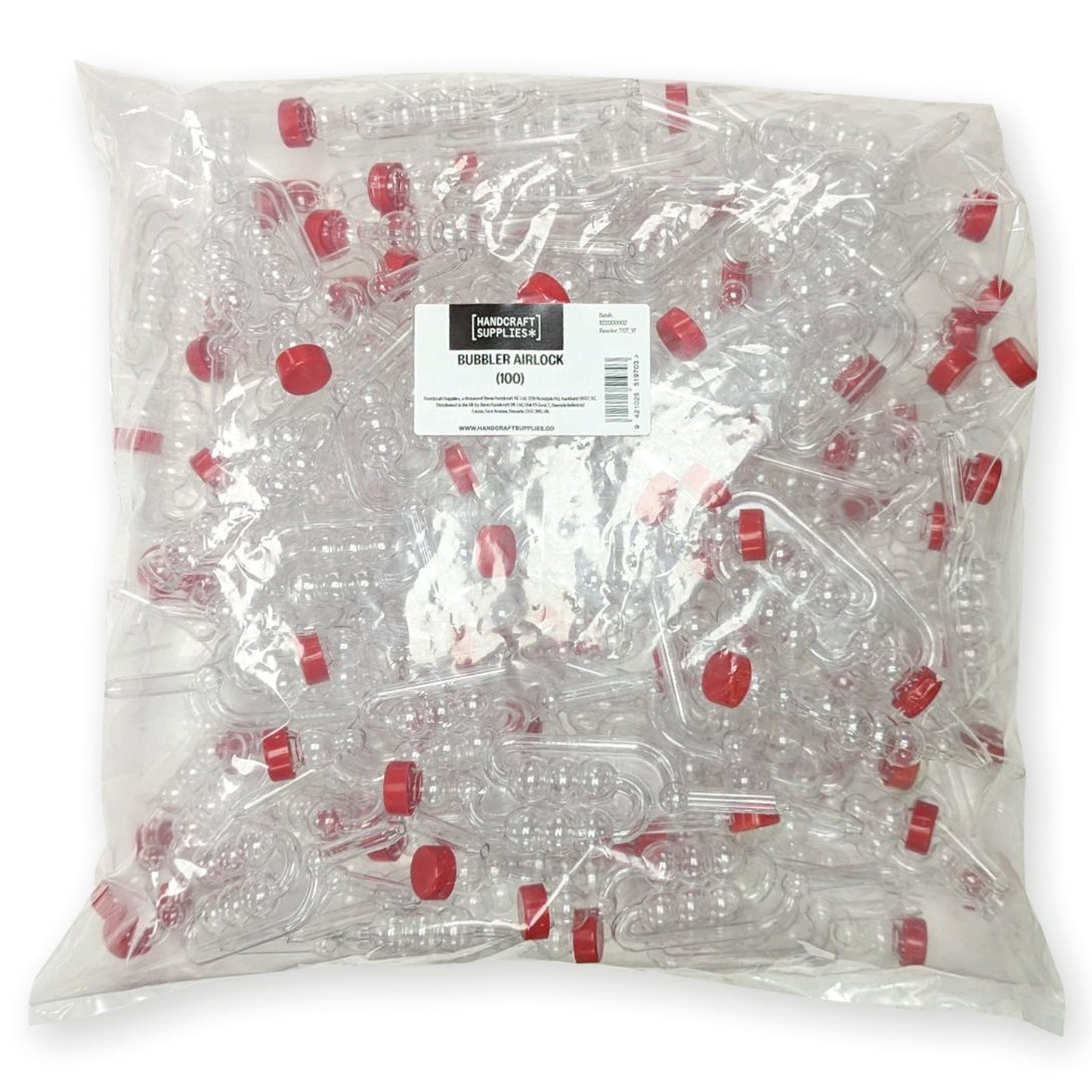
The classic S-shaped bubbler airlock with a red cap - fit it to your fermenter and you can see at a glance when fermentation is under way.
What it does
An airlock (also called a fermentation lock or trap) fits into a grommet in a fermenter lid or a bored rubber or cork bung. It lets CO2 escape during fermentation while keeping air and airborne contaminants away from your brew.
Features
- Traditional S-shaped bubbler design
- Red cap to keep dust and insects out
- Fits standard grommets and bored bungs or corks
- Supplier code: B-7127
How to use
Half-fill the airlock with water or sanitiser solution and push it into the grommet or bung. Once the yeast gets going, bubbles pass through the water - a handy sign your brew is fermenting.
Who it's for
Everyone who ferments beer, wine or cider. Cheap enough to keep a spare for each fermenter and demijohn.
Complete the set
- Corks Demijohn Bored 3's - to fit it to a demijohn
- Favourite Spare Air-lock Grommet - to fit it to a fermenter lid
- ChemSan - for sanitising and filling the airlock