

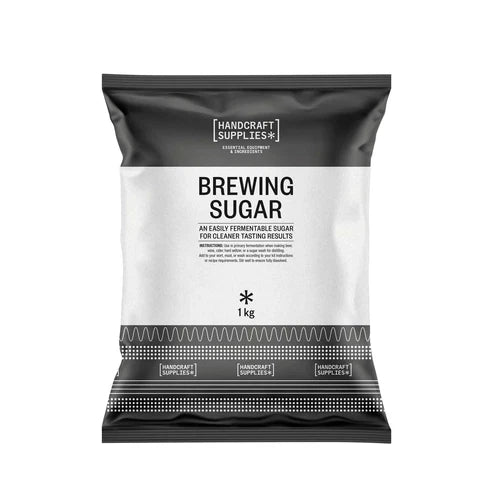
Brewing & Winemaking Sugar is pure dextrose (glucose) — the preferred sugar for home brewing beer, wine, and cider. Unlike household white sugar (sucrose), dextrose ferments completely and cleanly without leaving any residual cidery flavour in your finished brew, making it the standard choice for serious home brewers across the UK.
Frequently Asked Questions
- What's the difference between dextrose and normal white sugar?
- White sugar (sucrose) is a disaccharide that yeast must first split into glucose and fructose before fermenting. This extra step can produce small amounts of off-flavours — particularly a thin, cidery character in beer. Dextrose (glucose) is already in the form yeast prefers, so it ferments more cleanly and efficiently with no cidery aftertaste.
- How much brewing sugar should I add to a beer kit?
- Most standard 23-litre beer kits call for 1kg of brewing sugar. Use the full amount for the correct original gravity. If you want to upgrade further, replace some or all of the dextrose with Brew Enhancer 2 or Light Spraymalt for better body and head retention.
- Can I use brewing sugar for bottle priming?
- Yes — dissolve 80–90g in 300ml of boiling water, cool, and add to your beer before bottling for natural carbonation. This is called bulk priming and gives very consistent carbonation across the batch. Alternatively, use Carbonation Drops for even simpler priming.
- Is dextrose suitable for wine making?
- Yes — dextrose is widely used in fruit wines and country wines as the primary fermentable sugar. It ferments cleanly and doesn't contribute any off-flavours to the finished wine. Use alongside Yeast Nutrient and Citric Acid for best results.
- How does brewing sugar compare to Brew Enhancer?
- Plain dextrose ferments out completely, leaving no body or malt character. Brew Enhancers contain dextrose plus maltodextrin and/or dry malt, which leave unfermentable compounds that improve body, head retention, and malt character. For best beer quality, Brew Enhancer 2 is recommended over plain dextrose.