


Brewco Lactic Acid Powder 50g
Brewco Lactic Acid Powder 50g
Regular price
£3.49
Regular price
Sale price
£3.49
Taxes included.
Shipping calculated at checkout.
Quantity
Couldn't load pickup availability
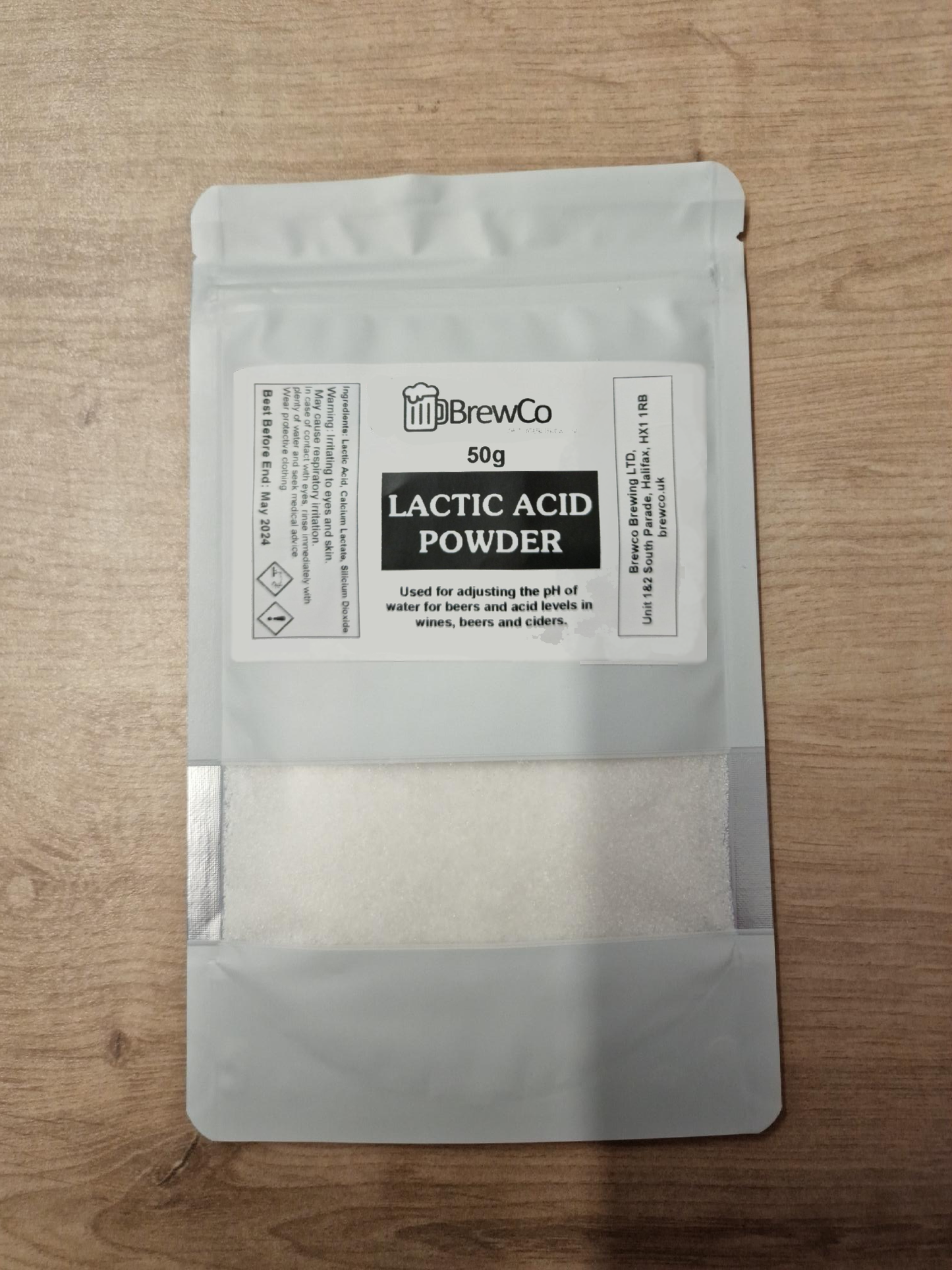

Brewco Lactic Acid Powder is a mild acid for lowering the pH of your mash or brewing water. Lactic acid is a natural by-product of fermentation, present in trace amounts in every beer, wine and cider, and is regarded as the safest acid for treating brewing water.
What it does
- Increases acidity and lowers mash pH
- Helps pale, all-grain beers hit the right mash pH when your water is alkaline
- Can add a gentle sour tang when used in finished beer, cider or wine
- Powder form - easy to measure and store
Specs
- Contents: lactic acid powder, 50g
- Guide rate: about ¼ teaspoon in a standard mash lowers pH by around 0.1
How to use
Add a little at a time to the mash and re-check pH - see the How to Use box.
Who it's for
All-grain brewers in hard-water areas, and anyone fine-tuning mash chemistry. Measure as you go with Beer pH Test Strips or a pH2Go digital pH meter. If you'd rather adjust pH with grain, Weyermann Acidulated Malt does a similar job.