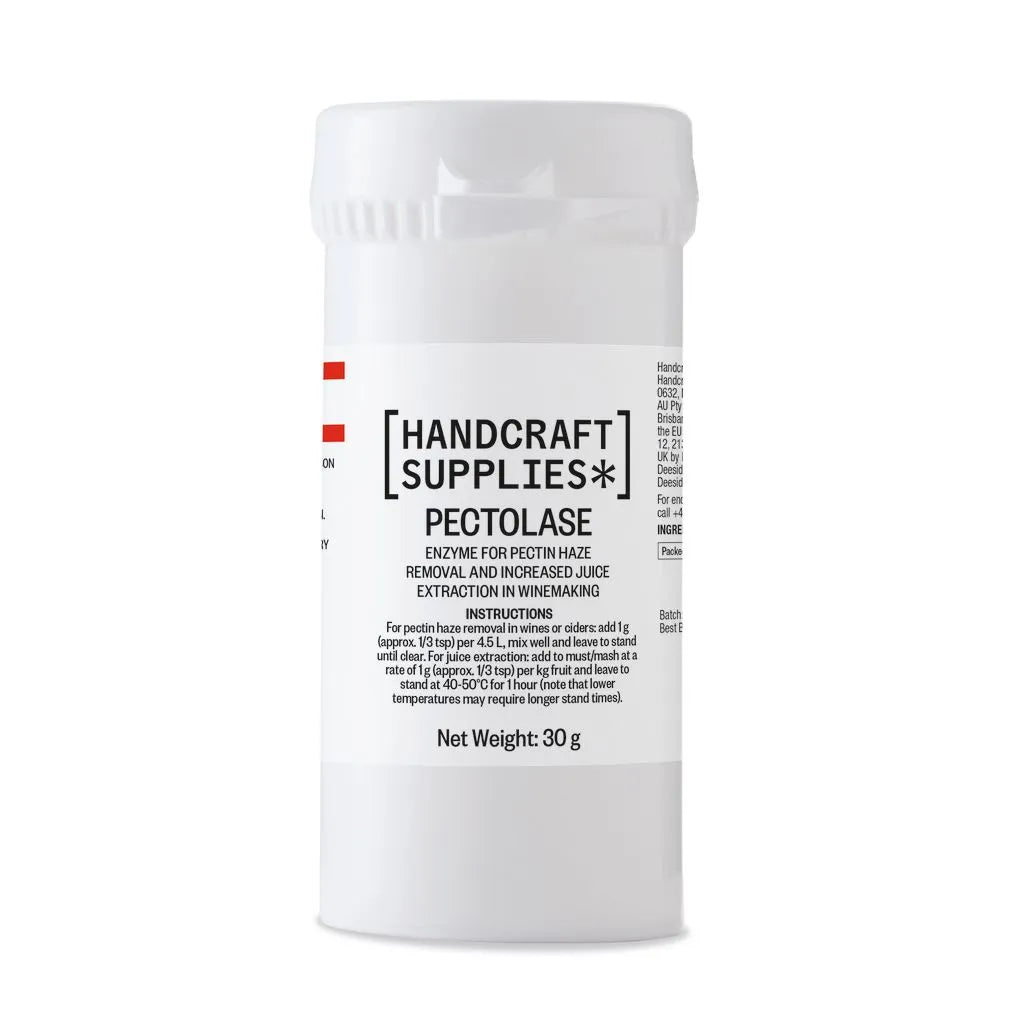
Pectolase 30g is a pectic enzyme for wine and cider makers. It removes pectin haze - the stubborn cloudiness from fruit cell walls - and increases juice extraction when you press or soak fruit.
Why add pectolase
- Prevents pectin haze, which can stay even after fining
- Breaks down fruit cell walls for more juice
- Recommended for high-pectin fruit such as apples, plums, damsons and berries
- Small 30g pack, ideal for occasional batches
Specs
- Contents: 30g
- Type: pectic enzyme
How to use
Add before fermentation starts, as pectin haze is much harder to shift afterwards - see the How to Use box below.
Complete your wine making kit
For anyone making fruit wine or cider. Making lots? Choose Pectolase 100g.
Dose
1 tsp per gallon
2 tsp for boiled fruit
Pack treats
About 12 gallons
30g
Used for: Pectic enzyme - breaks down pectin in fruit to stop pectin haze and release more juice, colour and flavour.
When: In the must at the start, before fermentation - and only once hot fruit has cooled.
Step by step
1Dissolve 1 level teaspoon (about 2.5g) per gallon (4.5 litres) in a little lukewarm must or water.
2For boiled or heated fruit, use 2 teaspoons per gallon once cooled.
3Stir into the must and mix well.
Good to know: Heat destroys the enzyme - never add to hot must. Don't use at the same time as bentonite - it stops the enzyme working.
Frequently Asked Questions
What is pectolase?
Pectolase is a pectic enzyme (pectinase) that breaks down pectin — the natural gelling agent in fruit that causes a permanent haze in wine and cider. It's an essential additive for any wine made from fresh fruit.
How much pectolase per gallon?
1 level teaspoon (about 2.5g) per 4.5 litres / 1 gallon, added to the must at the start. Use 2 teaspoons per gallon for boiled or heated fruit, once cooled.
When should I add pectolase?
Before fermentation, ideally when preparing the fruit and 12–24 hours before pitching yeast — the enzyme works best before alcohol is present. Avoid adding it at the same time as boiling water, as heat above ~40°C destroys the enzyme.
Can I add pectolase after fermentation?
Yes, if you discover a pectin haze in a finished wine — it will still work, but much more slowly (allow several weeks) because alcohol inhibits the enzyme. Prevention at the start is far more reliable.
How do I know if my haze is pectin?
Mix a little wine with three parts methylated spirit: if gelatinous strings or clots form, pectin is the cause and pectolase is the fix. If nothing forms, treat the haze with wine finings instead.