

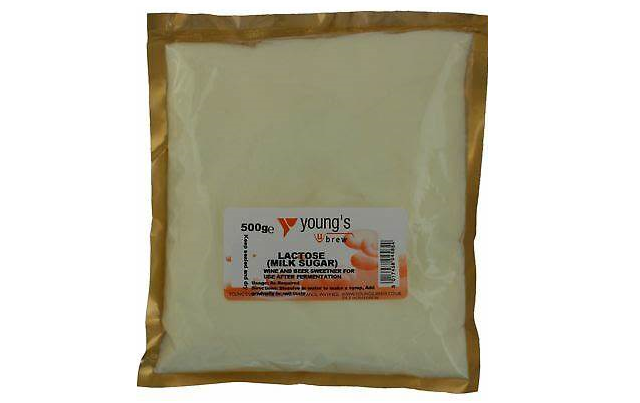
Lactose (milk sugar) is a non-fermentable sugar used primarily in the production of milk stouts and cream ales. Because yeast cannot ferment lactose, it remains in the finished beer as residual sweetness, adding body, creaminess and a smooth mouthfeel that perfectly complements roasted malt flavours.
Add 200–400g at flameout (end of boil) and stir until fully dissolved. The amount used directly controls sweetness — start with 250g and adjust in future batches.
Frequently Asked Questions
- Will lactose make my beer too sweet?
- At typical rates (200–350g per 23 litres), lactose adds a pleasant, subtle sweetness and creaminess rather than an overtly sweet character. The residual sweetness is balanced by the bitterness and roasted malt notes in stouts and porters. Start at 250g and adjust — you can always add more next time.
- Can lactose cause bottle bombs?
- No — this is one of lactose's key advantages. Because yeast cannot ferment lactose, it doesn't produce any extra CO2 after bottling. You can prime your bottles normally with Carbonation Drops or brewing sugar without any risk of over-carbonation from the lactose.
- When do I add lactose during brewing?
- Add lactose at flameout (the end of the boil) and stir until fully dissolved. It can also be added directly to the fermenter dissolved in a small amount of boiling water, cooled before adding. Don't add it cold — it needs to dissolve properly.
- Can I use lactose in any beer style?
- Lactose is most commonly used in milk stouts, cream stouts, sweet porters, and cream ales. It can technically be added to any style, but it works best in dark, malt-forward beers where the sweetness and creaminess complement the flavour profile rather than clashing with it.
- Is lactose suitable for people who are lactose intolerant?
- Not reliably. Lactose remains in the finished beer and can cause issues for people with lactose intolerance. Always label your beer clearly if you've used lactose, particularly if sharing with others.