

Oat Malt for Brewing – 1kg Bag
Oat Malt for Brewing – 1kg Bag
Regular price
£2.19
Regular price
Sale price
£2.19
Taxes included.
Shipping calculated at checkout.
Quantity
Couldn't load pickup availability
Oat malt, here in a 1kg bag, is an increasingly popular specialty grain with homebrewers, known for adding unique flavours and enhancing mouthfeel. Here’s a comprehensive overview of its characteristics and uses in brewing:
Characteristics of Oat Malt
-
Flavour Profile:
- Creamy and Oaty: Oat malt imparts a soft, creamy mouthfeel and a mild, oaty flavour. It can add a smoothness that complements other flavours in the beer.
- Nutty Notes: Some brewers note a subtle nuttiness, which can enhance the complexity of the final beer.
- Sweetness: Oat malt can contribute a light sweetness, making it suitable for certain styles where a touch of sweetness is desirable.
-
Colour:
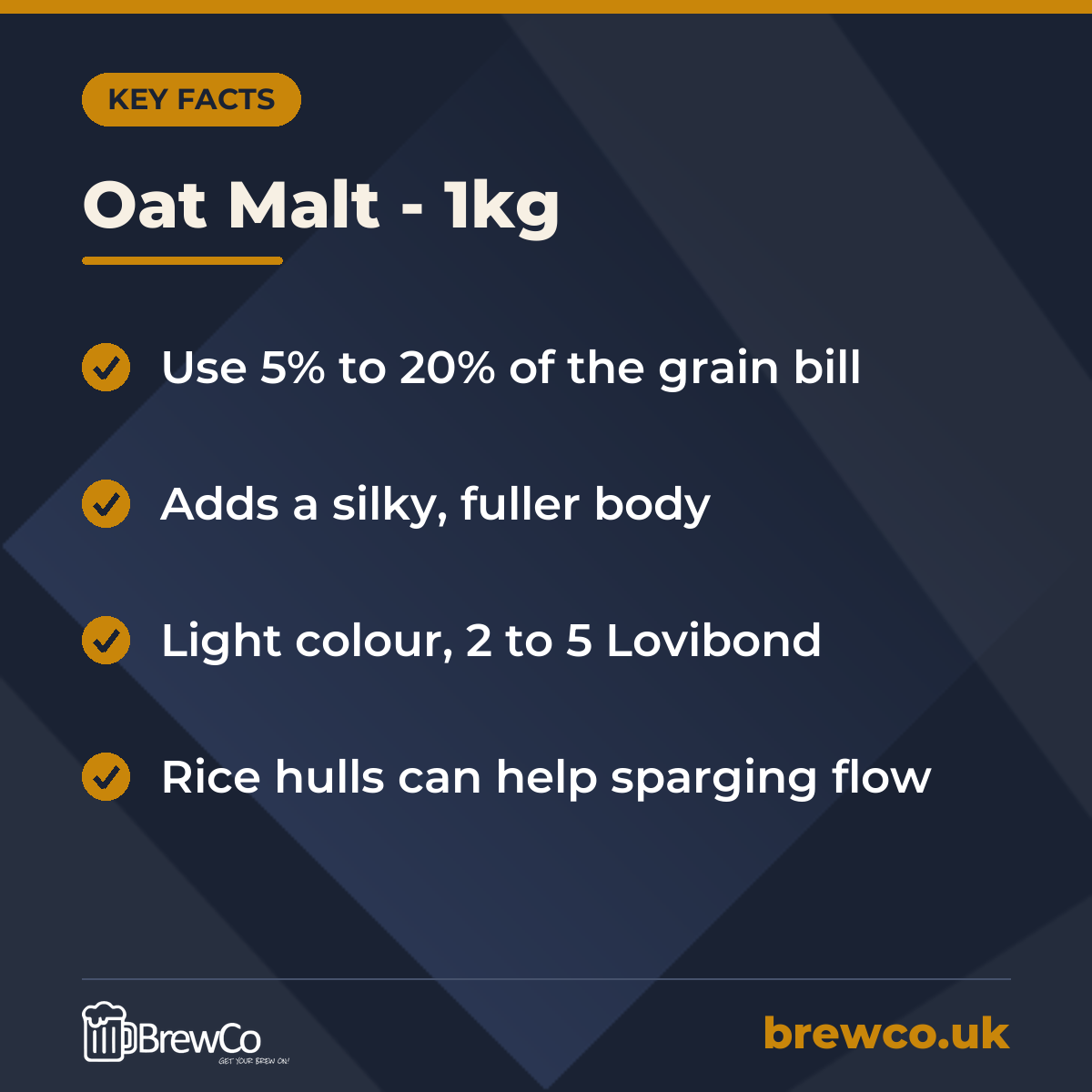
- Typically light in colour, ranging from 2 to 5 Lovibond, which means it adds very little colour to the final beer, keeping it pale or golden.
-
Aroma:
- Adds a gentle, grainy aroma with hints of sweetness and nuttiness.
-
Body and Mouthfeel:
- Oat malt significantly improves mouthfeel, providing a silky and fuller body, which is particularly desirable in certain styles.
-
Sugar Content:
- Oat malt contains both fermentable and unfermentable sugars, contributing to a balanced sweetness and enhancing body without overly increasing the final gravity.
Usage in Brewing
-
Typical Usage Rate:
- Use between 5% to 20% of the total grain bill. Higher percentages can enhance the characteristics but may also lead to a thicker mash.
-
Beer Styles:
- Oatmeal Stouts: Classic use for added creaminess and body.
- Wheat Beers: Enhances smoothness in styles like Hefeweizen.
- Pale Ales and IPAs: Adds complexity and mouthfeel without affecting the colour significantly.
- New England IPAs: Often used for their hazy character and smooth mouthfeel.
-
Mashing Considerations:
- Oats can lead to a thick mash, so be prepared for potential sticking. Consider adding rice hulls to help improve flow during sparging.
- A step mash can be beneficial for optimizing sugar extraction and reducing viscosity.
-
Complementary Grains:
- Pairs well with base malts like Pale Malt or Pilsner Malt and can be blended with other specialty grains such as Crystal Malt or Munich Malt for additional complexity.
Tips for Homebrewing with Oat Malt
- Start Small: If new to oat malt, start with a lower percentage to gauge its impact on flavour and mouthfeel before increasing the amount.
- Consider Water Chemistry: The mouthfeel contributed by oat malt can be accentuated by adjusting water chemistry, particularly with calcium levels.
- Experiment: Oat malt's unique flavour and mouthfeel can vary significantly based on other ingredients and brewing methods, so feel free to experiment with different styles and combinations.
By incorporating oat malt into your brewing process, you can achieve beers with unique flavours, enhanced body, and a satisfying mouthfeel, enriching your homebrewing experience.