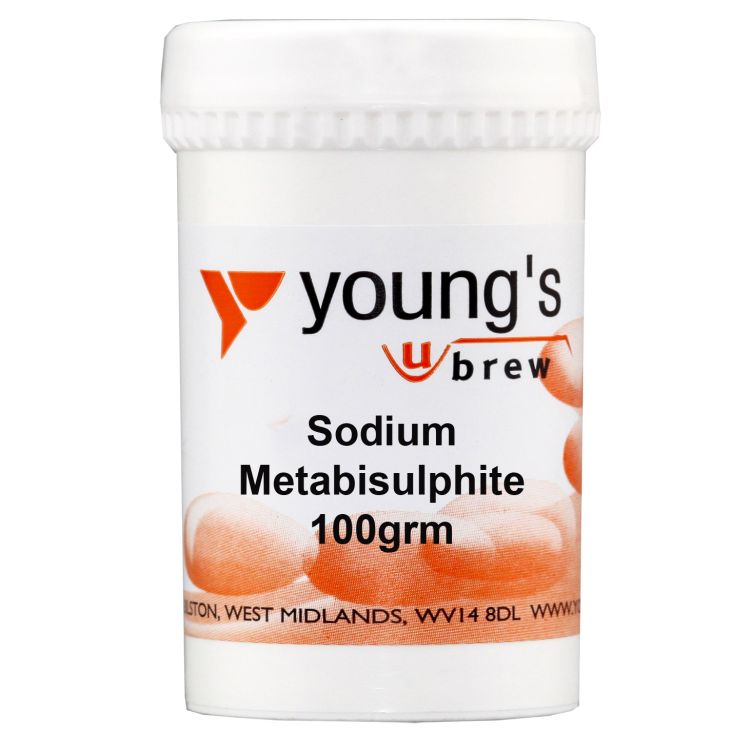
Sodium Metabisulphite 100g is a sterilant, antioxidant and preservative for wine making. Mixed with water it makes a sterilising solution for equipment and bottles, and it's also used in wine to protect against bacteria and oxidation.
Uses
- Make up a sterilising solution for fermenters, demijohns and bottles
- Helps inhibit bacterial growth in wine
- Acts as an antioxidant to help prevent oxidation
- Works alongside Campden Tablets
Specs
- Contents: 100g
- Type: sodium metabisulphite powder
How to use
Coat all surfaces with the solution, then rinse thoroughly with clean water before use - see the How to Use box for mixing.
Other cleaning options
An economical, traditional choice for wine makers and home brewers who are happy to rinse their kit after sterilising. Browse all cleaning and sanitising supplies.
Sodium Metabisulphite
How to Use
Dose
1 tsp per pint
sterilising solution
In wine
1/16 tsp per gallon
or 1 Campden tablet
Contact
10 minutes
then rinse
Used for: Makes a sulphite sterilising solution for equipment and bottles, and protects wine and cider from oxidation and spoilage.
When: Fresh, just before use on clean equipment; or in the must/wine before fermentation and at bottling.
Step by step
1Sterilising: dissolve 1 teaspoon per pint (568ml) of cold water.
2Coat every surface, leave 10 minutes, then rinse with cold tap water.
3In must or wine: just 1/16 teaspoon per gallon (4.5 litres), dissolved and stirred in - or use Campden tablets for easier dosing.
Good to know: Avoid breathing the fumes (sulphur dioxide) - use somewhere well ventilated; asthmatics take extra care. Contains sulphites. Harmful if swallowed; may irritate skin and eyes. Don't mix with chlorine cleaners or acids.
Frequently Asked Questions
What is sodium metabisulphite used for in home brewing?
Two main jobs: sterilising equipment (mixed with water it releases sulphur dioxide, which kills bacteria and wild yeast on contact) and stabilising wine or cider (a small dose before bottling prevents oxidation and spoilage). It's the powdered form of the same active ingredient found in
Campden tablets.
What's the difference between sodium metabisulphite and potassium metabisulphite?
They do the same job. Potassium metabisulphite is often preferred for adding directly to wine because it doesn't contribute sodium, while sodium metabisulphite is the economical choice for sterilising solutions where the product is rinsed away. For equipment cleaning, either works identically.
How much sodium metabisulphite do I use for sterilising?
1 teaspoon per pint (568ml) of cold water. Wet all surfaces of your equipment, leave for a few minutes, then drain. Rinse with cold pre-boiled water before use. The solution keeps in a sealed container for about a week — once it stops smelling sharply of sulphur it needs replacing. See our
guide to sanitising home brewing equipment.
Is sodium metabisulphite the same as Campden tablets?
Effectively yes — Campden tablets are pre-measured doses of metabisulphite (one tablet treats 4.5 litres). Powder is more economical for sterilising large volumes of equipment; tablets are more convenient for accurately dosing wine or cider.
Can I use it to remove chlorine from tap water?
Yes — a tiny pinch (or half a crushed Campden tablet) per 23 litres neutralises chlorine and chloramine in brewing water, preventing medicinal off-flavours in your finished beer.