Skip to product information
1 of 1

Lactose 500g

Lactose 500g

Regular price £4.99
Regular price Sale price £4.99
Sale Sold out
Taxes included. Shipping calculated at checkout.
Quantity
View full details

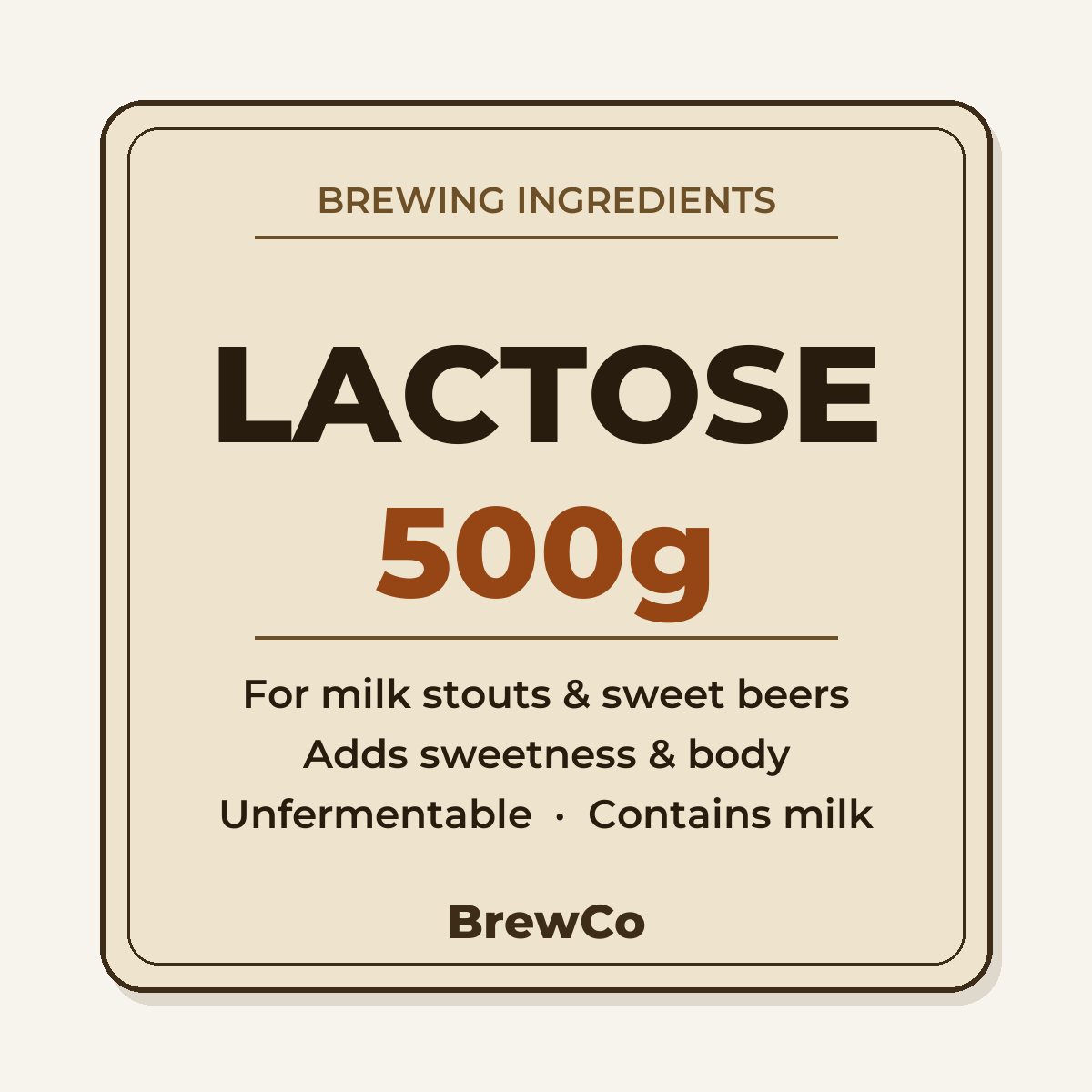
Lactose is milk sugar. Brewing yeast cannot ferment it, so the sweetness and body it adds stay in the finished beer - which is why it is the key ingredient in milk stouts and sweet stouts.

What it does

  • Adds lasting sweetness that the yeast leaves behind
  • Gives a smooth, creamy body
  • Used in milk and sweet stouts, milkshake IPAs and sweeter cream ales
  • Can also be used to sweeten ciders, since it will not ferment out

Details

  • Weight: 500g
  • Food grade, weighed and packed by BrewCo from 25kg sacks
  • Allergy advice: contains milk

See the How to Use box below for when and how to add it.

Goes well with

For brewers who like a sweeter, creamier stout or a softer, sweeter cider.

Lactose
How to Use
Dose
250-500g per 23L
250-300g typical
Adds
Sweetness & body
contains milk
When
Last 10-15 min of boil

Used for: Adds sweetness and a creamy body to milk stouts, pastry stouts and milkshake IPAs. Yeast can't ferment it, so the sweetness stays.

When: Extract/all-grain: last 10-15 minutes of the boil. Kits: dissolved in hot water and added with the kit.

Step by step
1Weigh 250-500g per 23 litres (250-300g is typical for a milk stout).
2Dissolve fully in hot wort or freshly boiled water.
3Add in the last 10-15 minutes of the boil, or stir into the fermenter with the kit.
4Ferment as normal - expect a higher final gravity.
Good to know: ALLERGEN: MILK. Not suitable for people with a milk allergy or vegans - label any bottles you give away. Don't use it as priming sugar - it won't carbonate the beer.
Frequently Asked Questions
How much lactose for a 23 litre milk stout?

250-300g is typical. Use up to 500g for a sweeter beer.

When should I add it?

In the last 10-15 minutes of the boil, or dissolve in hot water and add with a kit.

Is it suitable for vegans or people with a milk allergy?

No - lactose is milk sugar.

Can I use it to carbonate bottles?

No - yeast can't ferment it, so use normal priming sugar for carbonation.